
Prompt Engineering
100 courses5 categories
Part of LearnData & AI
Prompt engineering is the consumer side of large language models — getting useful work out of ChatGPT, Claude, Gemini, Midjourney, and the coding assistants that wrap them. Unlike LLM engineering (which lives on the provider/API side) or the broader AI hub, this topic focuses on people using the tools effectively: developers driving Cursor and Claude Code, marketers running content workflows, analysts extracting structure from documents, and designers iterating with image and video models.
The skill in 2026 is no longer "how to phrase a question." Every flagship model handles short prompts well. What separates expert users from casual ones is workflow design: choosing the right model for each task, structuring multi-step conversations, attaching the right context, using projects and custom instructions, and building reusable templates that survive product updates. The same applies on the creative side — Midjourney v7, Flux, and the current video models reward users who understand parameter syntax and reference workflows.
What you'll find under this topic
- ChatGPT mastery: Custom GPTs, projects, voice mode, code interpreter, Actions
- Claude workflows: Projects, Artifacts, Computer Use, Claude Code for development
- AI coding tools: Cursor, Claude Code, Copilot, Windsurf — context selection and review loops
- Image generation: Midjourney v7, Flux, Stable Diffusion — parameter syntax and references
- Prompt patterns: role priming, chain-of-thought, few-shot, structured output, self-critique
- Business workflows: research, content production, data extraction, customer support
- Model selection: when to use Sonnet vs Opus vs GPT-4 vs Gemini for what task
This skill set transfers across job functions. Engineers ship features faster, writers produce more with less friction, analysts handle larger document sets, and founders prototype products without hiring. It is the most widely applicable category on CourseFlix because the tools have a near-universal user base in 2026.
Categories(5)


Courses(100)
Showing 1–30 of 100 courses
 NewThe course will teach you how to apply AI tools in development: planning tasks, writing and checking code, testing, debugging, and conducting code reviews.5h 24m
 NewA practical course on creating AI bots without coding. Learn to develop and test intelligent assistants for small businesses.2h 38m
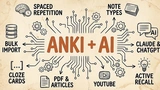 NewMaster Anki and AI to create effective flashcards and accelerate learning. The course will help you build a review system and retain knowledge for a long time.2h 3m5/5
 NewThe practical course on AI development helps engineers implement an AI-first approach, accelerate code creation, and improve development quality.12h 48m
 NewClaudify transforms the terminal into a powerful AI environment with memory, agents, and checks, providing stable and efficient development with Claude Code.5/5
 Updated 1mo agoThe course teaches how to implement AI in production, manage context, design architecture, and create reliable agents to accelerate development.10h5/5
 Updated 1mo agoPractical course on Claude Code will help you master the basics and advanced techniques, create AI workflows, and accelerate development in real projects.11h 33m5/5
 Updated 2mo agoThe practical course on working with Claude Code helps quickly master the CLI agent, context engineering, and the creation of resilient multi-agent systems8h 44m5/5
 Updated 3mo agoPractical course on mastering Claude Cowork. Learn to use AI agents, create workflows, connect services, and automate tasks.2h 18m5/5
 Updated 3mo agoThe intensive course on developing practical AI skills in 30 days helps expedite the creation of texts, research, and sustainable workflows.6h 52m5/5
 Updated 3mo agoPractical course on integrating Claude Code into DevOps processes: installation on Linux, security, automation, and creating a real project portfolio.2h 30m
 Updated 3mo agoLearn to integrate Claude Code into your workflow. Create an AI application from scratch and secure it using modern technologies and practices.8h 57m5/5
 Updated 3mo agoLearn how to create applications with Next.js: UI design, authentication, databases, UX, payments via Stripe, and email automation. Suitable for beginners.8h
 Updated 3mo agoGain a practical understanding of AI product development: from MVP to a full-fledged solution, process automation, and testing of AI applications.3h 10m
 Updated 3mo agoLearn how to create a full-stack application using Next.js and the AI tool Claude Code. The entire development cycle from idea to production, including UX.5h 1m5/5
 Updated 4mo agoStudy AI programming techniques for your projects. The course reveals strategies and approaches for the effective use of AI tools. Author: Zen van Riel.2h 51m5/5
 Updated 4mo agoStudy the Solveit method for solving tasks using code. The course covers algorithms, web development, system administration, and startup creation.23h 24m
 Updated 4mo agoStudy modern practices with generative AI and become an AI engineer. Apply Claude Code to real-world tasks to create reliable solutions.9h 31m5/5
 Updated 1mo agoBrad Traversy teaches a repeatable AI coding workflow with Claude Code and MCP servers while building a real SaaS app, DevStash.16h 23m5/5
 Updated 4mo agoMaster agent architecture and create an AI application in 6 weeks. Become an indispensable orchestrator of intelligent agents and boost your career.7h 6m5/5
 Updated 4mo agoLearn how to use a system of rules to maintain high code quality by applying directives and recommendations in a project using Claude Code.53m
 Updated 4mo agoMaster the skills to adapt language models to your tasks. Learn how to create effective skills and avoid the risks of using off-the-shelf solutions.1h 51m
 Updated 4mo agoDiscover a rich set of custom skills for Claude Code. Simplify development and auditing with ready-made AI tools and commands.
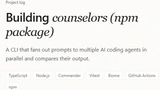 Updated 4mo agoLearn how to create an npm package for CLI Counselors using TypeScript and Node.js. A complete practical course with testing and automation through GitHub Actio38m
 Updated 5mo agoExplore the creation of the SOLO application: manage development in one place. A unified interface for npm, composer, and servers, with support for multiple pro2h 3m
 Updated 5mo agoLearn code audit skills to analyze and improve the codebase. The course covers tools for systematic analysis, project cleanup, and working with reports.30m
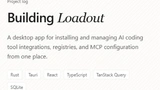 Updated 5mo agoTake the course and create a desktop application called Loadout to manage AI tools using modern technologies such as Rust and React.11m
 Updated 5mo agoPractical Guide to Mastering Claude Code. Learn the basics and key features step by step to confidently use the tool.1h 7m
 Updated 1mo agoAcademind's guide to Codex covers context, commands, MCP, the SDK, Plan Mode, and permissions through a hands-on project build.3h 10m
 Updated 5mo agoPractical course on AI development for engineers. Learn reproducible processes and improve your code with artificial intelligence.5/5
Related topics
Frequently asked questions
- Is prompt engineering still a real skill in 2026?
- Yes, but as a component of LLM engineering rather than a standalone job. The 2023 era of 'prompt engineer' job titles is over; what remains is a craft inside the broader role of AI engineer. Skilled prompt design still meaningfully changes output quality, cost, and reliability — it just isn't sold as a separate career path anymore.
- What separates good prompts from bad ones?
- Clear role and goal up front, explicit output format and examples, deliberate placement of static context (cacheable at the top) versus dynamic content, structured reasoning hints where useful, and explicit failure modes. Bad prompts read like vague instructions to an intern; good prompts read like a tight spec to a competent contractor with examples attached.
- Do prompting techniques transfer between models?
- Mostly yes for the high-level patterns — clarity, examples, structured outputs, retrieval grounding. Model-specific quirks (Claude's XML tags, OpenAI's response_format, role-message conventions, reasoning model defaults) do differ. Plan on a small portability test when switching providers, and avoid one-shot evaluations on a single model when the production stack might change.
- Chain-of-thought, ReAct, reflection — which patterns matter?
- Chain-of-thought helps on multi-step reasoning tasks but adds latency and cost. ReAct and agent loops matter for tool-using workflows. Self-reflection and self-critique improve some hard reasoning tasks. With modern reasoning models, simpler prompts often outperform clever scaffolding — evaluate on your actual task rather than copying patterns from blog posts.
- How do I get better at prompt engineering?
- Build an evaluation harness first so you can measure changes objectively. Read the model providers' own prompting guides — they're written by the people who trained the models. Run side-by-side comparisons on real tasks rather than toy examples. Keep a personal library of prompts that worked and notes on why they worked. Iteration without measurement is just vibes.