Creative is the pillar for engineering work where the output is something a user looks at, plays with, or holds in their hand — games, mobile apps, interactive web experiences. It pulls together the game-development track, the mobile-app track, and the web-animation track into a single hub for the kind of building that doesn't fit neatly into the backend / data / business framing of the other pillars.
The 2026 reality across these three topics is healthier than the broader tech narrative suggests. Indie game development has become genuinely accessible — Unity and Unreal both have free tiers that ship to console, Godot has matured into a real production option, and the LLM-generated boilerplate makes solo projects finish at a rate that wasn't possible five years ago. Mobile development has consolidated around Swift on the Apple side and Kotlin plus React Native or Flutter on the Android and cross-platform side, with a clear bifurcation between native-quality apps and the "good-enough" cross-platform majority. Web animation has quietly become a specialty in its own right — scroll-driven CSS, GSAP, Framer Motion, and Lottie are now expected on portfolio sites and high-end marketing pages.
What you'll find under this pillar
- Game development — Unity, Unreal, Godot, the engine fundamentals, shader and rendering basics, gameplay programming
- Mobile development — iOS with Swift / SwiftUI, Android with Kotlin / Jetpack Compose, React Native, Flutter, Capacitor
- Web animation — CSS transitions, GSAP, Framer Motion, scroll-driven animation, Lottie, motion design for the web
- Asset and tooling courses — Blender, Aseprite, audio basics, the surrounding skills creative work tends to drag in
- Portfolio-driven builds — finished games, finished apps, demo sites, the kind of project that opens conversations
The pillar is laid out from broadest to most niche. Game development sits first because it's the largest of the three topics by course count and the one where finished projects most directly translate into a portfolio or a side income. Mobile is next — narrower but with the strongest enterprise-hiring market — and web animation closes the pillar as a specialty most engineers and designers pick up as a second skill rather than a primary one.
Career paths under this pillar look very different from the rest of the platform. Game-dev roles concentrate in studios and indie self-employment; mobile roles split between consumer-app teams at product companies and consulting / contracting; web animation lives inside frontend, design-engineering, and marketing teams. The featured rail surfaces top-rated picks across all three so you can taste each one before deciding which to commit to. If you're building toward a single finished thing — a game on Steam, an app on the App Store, a portfolio site that wins clients — start with the topic that maps to the deliverable and let the others remain useful side knowledge.
Browse by topic(3)



Featured creative courses
![Flutter & Dart - The Complete Guide [2023 Edition] thumbnail](https://cdnq.courseflix.net/course/thumbnail/flutter-dart-the-complete-guide-2023-edition-360x180.webp "Flutter & Dart - The Complete Guide [2023 Edition] thumbnail") Classic
ClassicFlutter & Dart - The Complete Guide [2023 Edition]
 Updated 1y ago
Animations on the web
 Classic
Animating the web with Framer Motion
 Updated 1mo ago
Mission: Launch Your First App
 FreeUpdated 2y ago
Data Visualization + D3.js
 Updated 1y ago
React Native Course
 Updated 2y ago
reanimate.dev
 Updated 1y ago
Level Up: Build an Asteroids Space Shooter with Unity
 Updated 2y ago
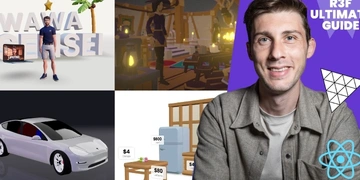
React Three Fiber: The Ultimate Guide to 3D Web Developmen
 Updated 1mo ago
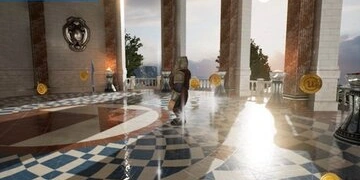
Unreal Engine C++ The Ultimate Game Developer Course
 New
NewLearn How to Make a Simple Unity 2D Game! (Lua Lander)
Frequently asked questions
- Unity, Unreal, or Godot for a first game?
- Unity for almost everyone starting in 2026 — the asset store, the tutorial ecosystem, and the cross-platform export are still the most beginner-friendly. Unreal makes sense if you specifically want 3D, photorealistic visuals, or to apply for AAA studio work. Godot is the right pick if you value open-source tooling, want a lighter editor, or are building 2D games where its node-based scene system shines. None of the three will hold you back if your first goal is finishing a game; switching engines later is a real cost but a one-time one.
- Is mobile development worth learning if I already do web?
- Yes, but pick one path deliberately. The fastest payoff is React Native or Flutter — your existing JavaScript or Dart knowledge transfers, you can ship to both stores from one codebase, and most consumer-app teams hire for cross-platform skills. Native (Swift / SwiftUI for iOS, Kotlin / Compose for Android) opens a higher-paying enterprise market and is necessary for anything that touches the platform deeply (background services, advanced AR, hardware integrations). The Mobile topic on this pillar covers all four routes side by side.
- Can I make a living as an indie game developer?
- Yes for a small minority, no for the median. The realistic distribution looks like this: most indie games on Steam earn under $5k lifetime, a healthy middle tier makes $20k–200k from a single release, and a small set of breakout indies earn life-changing money. The honest path is to finish small games first — game jam scale, four to eight weeks — build an audience around your process rather than the game itself, and treat the first two or three releases as paid learning rather than career bets. The Game Development topic on this pillar covers both the craft and the business side.
- How long does it take to ship a game or app from scratch?
- A first finished game from someone learning from zero is realistically four to nine months of evening work — short scope, 2D, a single mechanic done well. A first published mobile app is typically faster, two to four months, because the platform conventions do more of the design work for you. Both estimates assume you scope ruthlessly. The single largest cause of unfinished creative projects is scope creep: doubling the planned features quadruples the time to ship.
- Do I need to learn 3D art for game development?
- No — most successful indie games are 2D, and a working game programmer can collaborate with an artist, license assets, or use AI-assisted asset generation rather than learning Blender end-to-end. That said, comfort with basic 3D — placing cameras, understanding meshes, importing rigs — pays off even in 2D projects because the toolchains overlap. The Game Development topic on this pillar covers both pure code-focused tracks and ones that bundle in the visual side, so you can pick the depth that matches your goal.
- Where does web animation fit between design and engineering?
- It sits squarely in the middle — most web-animation work in 2026 is done by frontend engineers and design engineers, with motion-design specialists handling the high-end marketing and product work. The practical skill set is split: CSS transitions and View Transitions API for the everyday cases, GSAP or Framer Motion for the more complex ones, Lottie for designer-handoff workflows. The Web Animations topic on this pillar covers all three. Picking it up as a second skill after frontend pays off both in design-engineer roles and in freelance project work.