
AI (artificial intelligence)
384 courses15 categories
Part of LearnData & AI
AI and machine learning as a topic spans everything from classical statistical learning to the foundation models reshaping how software is built. The category covers two distinct skill tracks. The first is applied AI engineering — integrating language models, building RAG pipelines, designing agents, and shipping AI features in production. The second is traditional machine learning — supervised learning, neural networks from scratch, the math underneath modern systems.
The frontier moved fast through 2024-2025. Closed-model providers (OpenAI, Anthropic, Google, xAI) compete on benchmarks. Open-weight models (Llama, Qwen, Mistral, DeepSeek) reached parity for most tasks at a fraction of the cost when self-hosted. Toolchains stabilized: PyTorch dominates research, vLLM and llama.cpp run inference, Hugging Face hosts the ecosystem, and a new layer of agentic frameworks (LangGraph, OpenAI Agents SDK, CrewAI) handles orchestration.
What you'll find under this topic
- Large language models: transformers, fine-tuning, RLHF, DPO, model evaluation
- Applied AI: ChatGPT and Claude integration, prompt engineering, AI agents
- Retrieval-Augmented Generation: chunking, embeddings, vector stores (pgvector, Pinecone, Qdrant), reranking
- Computer vision: OpenCV, image generation (Stable Diffusion, FLUX), object detection
- Math foundations: linear algebra, probability, calculus for ML
- Production AI: cost control, evaluation, prompt-injection defense, observability
The roles hiring against this topic include ML engineers at companies like OpenAI, Anthropic, Google DeepMind, and Meta AI; AI product engineers at any SaaS company adding LLM features; and applied scientists at Spotify, Netflix, and Uber where recommendation systems still drive significant revenue.
Categories(15)


Courses(384)
Showing 1–30 of 384 courses
 NewMaster the AI assistant, code autocompletion, and Data Science Agent in Google Colab to speed up data analysis, Python, and ML projects.2h 3m
 NewCourse for Engineers: Design LLM and AI Agents for Production, Control Cost, Latency, Evals, Observability, and Failures.5h 58m5/5
 NewPractical Course on Agentic Engineering for Experienced Developers: Goal Setting, AI Agent Management, and Independent Result Verification.
 NewCourse on OWASP Top 10 2025 for Python: Auditing Flask, Django, and FastAPI, Finding Vulnerabilities, and Creating an AI Security Lead Agent.5h 28m
 NewThe course will teach you how to apply AI tools in development: planning tasks, writing and checking code, testing, debugging, and conducting code reviews.5h 24m
 NewMaster opencode for AI software development: local environment, Docker, SDD, BDD, AGENTS.md, and safe operation of an AI agent with code.8h 17m
 NewMaster the full cycle of SLM creation: data preparation, training, tuning, RAG, inference optimization, and local deployment in the company.41h 41m
 NewMaster LLM inference in production: GPU optimization, quantization, vLLM, Ray Serve, and edge deployment in practice in 4 weeks.30h 31m
 NewStudy digital ethics, data protection, accessibility, and the responsible application of AI to create reliable products.2h 13m
 NewPractical AI course for business: idea generation, demand validation, lead generation, sales, and process automation for growth.25h 37m
 NewLearn to use Fable 5 as an AI assistant: build workflows, delegate routine tasks, analyze data, and prepare solutions.4h 54m
 NewA practical course on creating AI bots without coding. Learn to develop and test intelligent assistants for small businesses.2h 38m
 NewPractical course on developing voice AI agents: architecture, ASR, TTS, LLM, and creating production-ready solutions for modern services.17h 8m5/5
 NewA practical course on building agent-based AI systems, RAG architecture, context engineering, and LLMOps for developing reliable enterprise solutions.35h 30m5/5
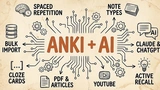 NewMaster Anki and AI to create effective flashcards and accelerate learning. The course will help you build a review system and retain knowledge for a long time.2h 3m5/5
 NewPractical course on creating a local AI platform with Ollama and OpenClaw. Learn to deploy LLM, configure GPU, and build autonomous agents.2h 51m
 NewThe practical course on AI Red Teaming and AI security helps master methods for identifying vulnerabilities, attack modeling, and protecting AI systems.11h 42m5/5
 NewThe course helps to master the basics of artificial intelligence and the strategic implementation of AI, developing the key skills of a modern AI leader.29h 16m
 NewMaster the creation of an AI assistant that automates routine processes and helps save 5-10 hours a week, increasing work efficiency.16h 59m
 NewThe course teaches how to work with Bun, create servers, routing, testing, and building applications, helping to master the modern JavaScript runtime.4h 5m
 NewThe practical course on AI development helps engineers implement an AI-first approach, accelerate code creation, and improve development quality.12h 48m
 NewClaudify transforms the terminal into a powerful AI environment with memory, agents, and checks, providing stable and efficient development with Claude Code.5/5
 Updated 1mo agoPractical course on creating AI applications on AWS Bedrock. Learn about generative AI, working with LLM, model tuning, and deploying scalable solutions.15h 17m
 Updated 1mo agoThe course helps to find early market insights using AI research, analyze real data, and create your own decision-making system.6h 34m5/5
 Updated 1mo agoThe course on data engineering patterns helps to master architectural approaches and build reliable pipelines to enhance data engineering.13h 15m
 Updated 1mo agoPractical course on Apache Spark for confident work with distributed data processing, pipeline optimization, and creating efficient Big Data solutions.4h 28m
 Updated 1mo agoThe Go and AI Agent Intensive course will teach you how to work with specifications, context engineering, and agent workflows for confident code development8h 16m
 Updated 1mo agoThe course teaches how to implement AI in production, manage context, design architecture, and create reliable agents to accelerate development.10h5/5
 Updated 2mo agoPractical course on creating AI workflows and agents in Microsoft Foundry and Azure AI. Master architecture, integrations, and development of production4h 38m
 Updated 2mo agoPractical course on Claude Code will help you master the basics and advanced techniques, create AI workflows, and accelerate development in real projects.11h 33m5/5
Related topics
Frequently asked questions
- Is AI a good career path in 2026?
- Yes. Demand still outpaces supply across applied AI engineering, ML research, and AI product roles, and pay sits at the top of the engineering market. The biggest hiring shift since 2024 is that 'AI engineer' now usually means LLM-integration and agent work rather than training models from scratch, so a software-engineer background plus solid Python is enough to enter without a PhD.
- Do I need a math or PhD background to work in AI?
- Not for applied AI — building products with foundation models, RAG pipelines, agents, and evaluation only needs working Python and ML literacy. Deep math (linear algebra, probability, optimization) is required for ML research, model architecture work, and fine-tuning at scale. Most production AI engineering jobs sit firmly in the applied bucket.
- AI vs Machine Learning — which should I learn first?
- Start with applied AI (LLM APIs, prompts, RAG) if your goal is shipping features fast; classical ML and the math underneath make more sense if you want depth in model behaviour, fine-tuning, or research. Most engineers today learn applied AI first and pick up ML fundamentals as needed when LLM outputs need debugging or evaluation.
- What stack do AI engineers actually use day to day?
- Python is the default language. Inference talks to OpenAI, Anthropic, or open-weight models via vLLM or llama.cpp. Orchestration leans on LangGraph, OpenAI Agents SDK, or hand-rolled state machines. Storage uses pgvector, Qdrant, or Pinecone for retrieval. Evaluation runs on LangSmith, Braintrust, or in-house harnesses. PyTorch shows up for any custom training.
- How long until I can ship something real with AI?
- A working RAG prototype or simple agent is a weekend if you already write code — the APIs are well-documented and the toolchain is mature. Reaching production quality (latency budgets, eval harness, cost control, prompt-injection defense) is typically 2–4 months of consistent project work. Hireable depth in applied AI takes 6–12 months.