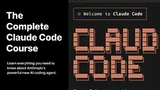
AI-assisted coding is the workflow built around large language models that write, refactor, review, and explain code. The category is one of the fastest-moving in software because the underlying tooling has changed completely twice in three years — first Copilot autocomplete, then chat-based assistants, now agentic coding (Cursor, Claude Code, Aider, Cline) where a model edits files, runs tests, and iterates without manual copy-paste.
The day-to-day skill is no longer "how to ask the model to write a function" — every senior assistant does that well enough. The new skill is selecting context (which files the model sees), structuring projects so models navigate them efficiently, and building feedback loops where the model can verify its own work via tests, type checks, and linters.
What you'll work with in these 45 courses
- Editor integrations: Cursor, Claude Code, GitHub Copilot, Windsurf, Zed AI
- Agent loops: file edits, command execution, test-driven self-correction
- Prompt patterns specific to code: spec-first, test-first, rewrite-vs-extend
- Context engineering: which files to attach, how to chunk monorepos
- Model routing: when to use Sonnet vs Opus vs GPT-4o vs Gemini for what
- Production guardrails: review process, secret scanning, security review
Adoption is now standard at most engineering organizations. Microsoft, Stripe, Anthropic, OpenAI, and most YC-batch startups expect new hires to use AI assistants effectively from day one.