
Interview Prep
172 courses5 categories
Part of LearnBusiness
Interview prep is the playbook for getting through modern tech hiring loops. The pipeline at most product companies in 2026 is still recognizably the LeetCode-era format — recruiter screen, technical phone, then 3–5 on-site rounds — but the rounds themselves are split into distinct tracks: data-structures-and-algorithms, system design (backend and frontend), language-specific deep dives, behavioral / leadership, and increasingly an AI-tooling fluency round where you are observed using Copilot or Claude Code on a small task.
The frameworks that survived contact with thousands of candidates are practical. For DSA: pattern recognition over memorization (two-pointer, sliding window, monotonic stack, BFS/DFS variants, dynamic programming on subproblems). For system design: requirements clarification first, then API sketch, then data model, then scaling story — never start with "I'll use Kafka." For behavioral: STAR-format stories prepared in advance, mapped to the most common prompts. Companies have not stopped asking these questions; the questions just got more refined.
What you'll find under this topic
- Data structures and algorithms: arrays, hash maps, trees, graphs, heaps, dynamic programming
- System design interviews: scope, capacity estimation, data model, scaling tradeoffs
- Frontend system design: component architecture, state, rendering, accessibility
- Coding interview patterns: two-pointer, sliding window, recursion, backtracking
- Behavioral and leadership: STAR stories, conflict resolution, prioritization
- Career strategy: resume, levelling, compensation negotiation, internal transfers
- Company-specific prep: FAANG, mid-size, late-stage startups, EU/UK markets
The candidates who clear the loop at Google, Meta, Amazon, Stripe, Coinbase, Atlassian, and the well-known late-stage startups consistently report the same thing: 80% of preparation is volume on a small set of patterns, 20% is mock interviews with a real human. The courses under this topic cover both halves.
Categories(5)


Courses(172)
Showing 1–30 of 172 courses
 NewMaster LLM inference in production: GPU optimization, quantization, vLLM, Ray Serve, and edge deployment in practice in 4 weeks.30h 31m
 NewThe course helps to develop analytical thinking and confident problem-solving skills through more than 200 practical exercises, suitable for developers.13h 32m
 NewA practical course on building agent-based AI systems, RAG architecture, context engineering, and LLMOps for developing reliable enterprise solutions.35h 30m
 Updated 1mo agoThe course helps to master the basics of algorithms, understand complexity, delve into recursion, and learn practical approaches for preparing for technical5h 34m5/5
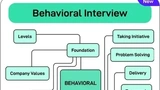 Updated 1mo agoThe course on behavioral interviews helps IT specialists confidently pass interviews, demonstrate leadership, and showcase the required grade.
 Updated 3mo agoThe interactive course helps to master data structures and algorithms with visualizations, step-by-step code, and practical exercises for confident skills.
 Updated 3mo agoBuild a successful career in AI: from Junior to Senior. Learn popular strategies, create a personal brand, and acquire valuable skills for growth.5h 2m
 Updated 3mo agoThe practical course helps engineers increase their impact in the company by improving communication and linking technical solutions with business value.9m
 Updated 4mo agoStudy the Solveit method for solving tasks using code. The course covers algorithms, web development, system administration, and startup creation.23h 24m
 Updated 5mo agoStudy the universal principles of system design for AI applications and platforms. Apply the knowledge to develop complex digital systems and manage them.4h 22m
 Updated 5mo agoThe course helps to learn 33 key patterns for solving coding interview problems. These techniques help in getting offers from companies like Google, Meta...
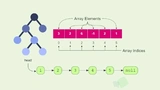 Updated 1mo agoA practical, text-based course on data structures and algorithms, with coding exercises built around real interview problems.
 Updated 5mo agoLearn to design scalable frontend systems. Understand architectural trade-offs and key patterns for professional developers.5h 55m5/5
 Updated 6mo agoTransform from a developer to an architect in 14 days. Learn key architectural solutions and design scalable systems with the System Design course.
 Updated 1mo agoDmitriy Zhiganov's course builds the judgment to pick and defend frontend tools, helping mid-level developers grow into senior roles.5h 38m
 Updated 6mo agoCourse on advanced programming patterns for successful completion of technical interviews. Includes strategies, algorithms, and practical examples.
 Updated 6mo agoAn advanced course for engineers preparing for serious systems design interviews. Learn to design reliable and scalable systems.
 Updated 6mo agoThe original course on system design from Educative by DesignGurus. Real cases, frameworks, and videos will help prepare for interviews at FAANG and other compa15h 19m
 Updated 6mo agoAce the object-oriented design interview: a structured approach to open-ended OOD problems, with examples and case studies from Design Gurus.
 Updated 6mo agoReady to take your programming skills to the next level? Mastering the SOLID design principles will fundamentally change your approach to software development.
 Updated 6mo agoLearn how design patterns improve software architecture. A course for understanding and practicing in Java, Python, JS, and C++.
 Updated 7mo agoA structured course for preparing for technical interviews in C# and .NET, covering key topics from syntax to architectural patterns.
 Updated 7mo agoDiscover the world of distributed systems - a dynamic field where the evolution of multiple computers has transformed both quantity and distribution.19h 12m5/5
 Updated 7mo agoLearn to identify true needs and choose the appropriate technology stack. Practical scenarios and working with legacy code will help improve skills.2h 34m
 Updated 7mo agoMaster the basics of system design: from client-server architectures to databases. Perfect for beginners with no prior knowledge.
 Updated 7mo agoLearn about the key approaches and solutions for successfully navigating system design interviews, which will increase your chances for high-level positions.3h 6m
 Updated 1mo agoA beginner-friendly look at web application and software architecture, covering client-server, microservices, scalability, and fault tolerance.
 Updated 8mo agoPractical study of designing common web services like Netflix and Facebook. Suitable for developers, architects, and managers.
 Updated 8mo agoA course for programmers who want to build a successful career in IT. Learn how to choose technologies, develop a growth strategy, and avoid burnout.
 Updated 8mo agoAn advanced course on designing scalable systems. Enhance your skills with Grokking Scalable Systems and learn to develop robust architectures.5/5
Related topics
Frequently asked questions
- How much LeetCode is enough?
- 100–200 problems is usually plenty if you pick them deliberately by pattern rather than grinding randomly. The point is internalising patterns (two pointers, sliding window, BFS/DFS, dynamic programming buckets, heaps, graph traversal) — once you recognise them under interview pressure, additional volume has rapidly diminishing returns. Quality of review beats raw count.
- How should I prepare for system design interviews?
- Build a small library of templates (URL shortener, news feed, chat, rate limiter, geo-distributed cache) and practice talking through them out loud. Read 'Designing Data-Intensive Applications', some real engineering blogs (Discord, Figma, GitHub, Stripe, Cloudflare), and a couple of system-design-focused video resources. Mock interviews matter — the format is as much about communication as design.
- Do behavioral interviews really matter?
- Yes — they're often the deciding signal at mid-level and above and almost always the deciding signal at senior+. Have 6–10 strong stories ready (project, conflict, mistake, leadership, ambiguity), structured loosely as STAR. Vague answers are the single most common reason otherwise-strong candidates fail loops at top-tier companies.
- How long should I prepare for FAANG-style interviews?
- 3–6 months part-time for engineers already shipping code, 6–12 months from a weaker baseline. Front-load algorithmic patterns, layer in system design once those click, then add behavioural prep in the final month. Last-minute cramming rarely works because the bottleneck is pattern recognition under pressure, which only builds with repetition.
- Take-home assignments vs live coding — which is harder?
- Different skills. Take-homes reward production-quality code, README hygiene, scoping, and tests under a time budget. Live coding rewards talking out loud while writing reasonable code without an editor's full creature comforts. Many strong engineers excel at one and freeze on the other; practise both rather than picking only the format that feels natural.