CF

Grokking Design Patterns for Engineers and Managers

0h 0m 0s
English
Paid

Have you ever wondered how to make your software architecture more reliable, flexible, and easy to update? That's exactly what Design Patterns are for!

Think of them as secret recipes that help developers solve common problems in the most efficient way. Imagine having a magical toolkit that makes software creation smoother and your code incredibly cool.

In this course, you will dive into the world of design patterns—a treasure trove of solutions developed by experienced programmers over the years. It's akin to learning the best culinary secrets from world-class chefs! Don't worry, we will make the material as understandable as possible, even if this topic is completely new to you.


What we will study:

  • Simply about the complex: We will explain each design pattern in simple language so you immediately grasp its essence.
  • Practical magic: We will connect each pattern to real everyday situations to ensure complete understanding.
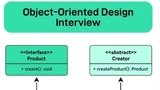
  • Visualize: With illustrative diagrams, you will see exactly how each pattern is assembled and works.
  • Coding together: Then we'll move on to practice with code examples in Java, Python, JavaScript, and C++.
  • Pros, cons, and application: Finally, we will discuss where and how best to use these patterns to make your software shine, as well as talk about their strengths and weaknesses.

Additional

  • This is a text-based course. Please download the archive to get started.

About the Author: Design Gurus

Design Gurus thumbnail

Design Gurus (designgurus.io) is the technical-interview-preparation platform founded by Arslan Ahmad, a former engineer at Facebook, Microsoft, and Hulu. The platform is best known for the Grokking the System Design Interview course — one of the most widely-used resources for the system-design portion of senior engineering interviews — alongside a deep catalog of coding-interview, behavioural, and ML / data-system design preparation material.

The Design Gurus approach is pattern-based: rather than memorising specific problems, the courses teach the recurring patterns (sliding window, two pointers, monolithic architecture, sharding strategies) that recur across interview question categories. The result is preparation that scales — engineers who study the patterns can solve problems they've never seen before, which is closer to what interviewers are actually testing for.

The CourseFlix listing under this source carries over 30 Design Gurus courses spanning coding interviews, system design, machine-learning system design, mobile system design, behavioural interviews, and the senior-level material aimed at staff-and-above engineering positions. Material is paid and aimed at engineers preparing for technical interviews at large tech companies.

Related courses

Frequently asked questions

What are the prerequisites for taking this course?
The course does not specify any prerequisites, making it accessible to both beginners and those with some experience in software development. It aims to introduce design patterns in a way that is understandable, even if you are new to the concept.
What will I be able to build after completing this course?
The course is focused on understanding design patterns rather than building specific projects. By the end of the course, you will have a toolkit of design patterns to apply to various software architecture challenges, enhancing the reliability and flexibility of your code.
Who is the target audience for this course?
This course is designed for both engineers and managers who are interested in improving their understanding of software architecture through design patterns. It is suitable for those looking to make their software more reliable and easier to update.
How does the depth of this course compare to other courses on design patterns?
The course provides a foundational understanding of design patterns, focusing on making the material accessible even to those new to the topic. It emphasizes practical applications over theoretical depth, making it a good starting point for beginners.
Does the course cover any specific tools or platforms?
The course does not focus on specific tools or platforms. Instead, it provides a language-agnostic approach to design patterns that can be applied across different programming environments and software development scenarios.
What topics are not covered in this course?
The course does not cover specific programming languages or development tools. It also does not delve into advanced theoretical aspects of design patterns, focusing instead on practical applications for improving software architecture.
How can this course benefit my career in software development?
Understanding design patterns can significantly enhance your ability to create reliable and flexible software architectures. This knowledge is valuable in any software development role, improving your problem-solving skills and making your code easier to update and maintain.