CF

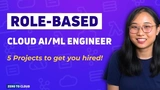
5 AWS Projects to Become a Cloud Engineer

0h 0m 0s
English
Paid

Embrace practical cloud engineering skills with our hands-on course featuring 5 comprehensive projects on AWS. Designed to reflect real-world industry practices, each project guides you from architectural design to deployment, testing, and troubleshooting. Gain experience that extends beyond basic AWS knowledge to integrating services into fully functioning production systems.

Course Overview

Through this course, you will engage in projects such as migrating legacy applications to the cloud, crafting secure network architectures, configuring fault-tolerant and scalable systems, implementing zero-downtime deployment strategies, and constructing event-driven backend solutions.

Learning Objectives

Throughout the course, you will develop the skills to:

  • Migrate on-premises applications to AWS using services like EC2, RDS, and AWS DMS.
  • Design robust VPCs, subnets, routing, and security groups for secure network environments.
  • Implement Blue-Green and Rolling Deployments with ALB, Target Groups, and Auto Scaling to ensure zero downtime.
  • Develop multi-VPC architectures leveraging AWS PrivateLink for secure private service exchanges.
  • Create event-driven systems utilizing API Gateway, Lambda, DynamoDB, SQS, and EventBridge.
  • Set up DLQ, manage retries, alerts, and monitoring with CloudWatch and SNS.
  • Deploy multi-region web applications using the AWS Global Accelerator.
  • Configure Route 53 Health Checks for resilient routing and failover strategies.
  • Diagnose and troubleshoot using logs, metrics, network checks, and the AWS Console.

Detailed Projects

As part of the course, you will complete five distinct projects:

  1. Migration of on-premises application to AWS — Transfer an internal web application from a Linux server to AWS using EC2, RDS, and DMS.
  2. Blue-Green and Rolling infrastructure deployment — Build a deployment system ensuring zero downtime, reflecting professional production team practices.
  3. Multi-VPC network and PrivateLink architecture — Design an isolated private network without public access, enhancing security.
  4. Event-driven order processing system — Transition from a monolithic to a serverless architecture, optimizing efficiency.
  5. Multi-region failover with AWS Global Accelerator — Develop a globally accessible and resilient web application.

Course Outcomes

Upon completion, you will have 5 fully-realized AWS projects, each demonstrating the skill set required for a modern Cloud Engineer, including application migration, network design, deployment strategies, event-driven architectures, and multi-region solutions.


Additional

  • This is a text-based course. Please download the archive to get started.

About the Author: Tech with Lucy (Lucy Wang)

Tech with Lucy (Lucy Wang) thumbnail

Lucy Wang publishes the Tech with Lucy brand — focused on the AWS cloud-engineering career path and the AI/ML-on-AWS stack. Her teaching emphasises building real working portfolio projects rather than studying for certification exams as a goal in themselves.

Her CourseFlix listing carries two Tech with Lucy courses: 5 AWS Projects to Become a Cloud Engineer and 5 AWS Projects to Become an AI/ML Engineer. The project-based format suits self-taught engineers building portfolio work that demonstrates real AWS competence to potential employers.

Material is paid and aimed at engineers building AWS career portfolio work. For broader content, see CourseFlix's AWS and AI App Building category pages.

Related courses

Frequently asked questions

What prerequisites do I need before taking this course?
Before enrolling in this course, you should have a foundational understanding of AWS services and general cloud computing concepts. Familiarity with basic networking and security principles will also be beneficial, as the course involves designing secure network architectures and configuring fault-tolerant systems. Experience with AWS services like EC2, RDS, and Lambda will help you grasp the project tasks more quickly.
What practical projects will I complete in this course?
The course includes five practical projects that reflect real-world industry practices. You will migrate legacy applications to AWS, craft secure network architectures, configure fault-tolerant systems, implement zero-downtime deployment strategies, and build event-driven backend solutions. These projects will help you integrate various AWS services into fully functioning production systems, preparing you for a career as a cloud engineer.
Who is the target audience for this course?
This course is designed for individuals aspiring to become cloud engineers, as well as IT professionals looking to deepen their practical AWS skills. It's suitable for those who want to go beyond basic AWS knowledge and work on real-world projects that involve architectural design, deployment, and troubleshooting of cloud systems.
What AWS services will I learn to use in this course?
You will learn to use a variety of AWS services, including EC2, RDS, AWS DMS, VPC, AWS PrivateLink, ALB, Auto Scaling, API Gateway, Lambda, DynamoDB, SQS, EventBridge, CloudWatch, SNS, and the AWS Global Accelerator. These services will be applied in projects that implement secure network architectures, zero-downtime deployment strategies, and event-driven systems.
How does this course compare in depth and scope to other AWS courses?
Unlike introductory AWS courses that focus on individual service basics, this course emphasizes the integration of multiple AWS services into complete production systems. It involves practical, hands-on projects that mirror industry practices, giving you experience in migrating applications, designing network architectures, and implementing deployment strategies. The course is aimed at those who want to apply their AWS knowledge to real-world scenarios.
What topics or skills are not covered in this course?
This course does not cover AWS certification preparation or in-depth programming tutorials. While you will use AWS services and perform scripting tasks, the focus is on cloud engineering projects rather than coding skills. Additionally, the course does not delve into non-AWS cloud platforms, so if you're looking for multi-cloud strategies, this may not meet that specific need.
What is the carry-over value of this course to other careers or courses?
The skills gained in this course have significant carry-over value to careers in cloud engineering, DevOps, and IT architecture. Understanding how to migrate applications, design secure networks, and implement deployment strategies on AWS prepares you for roles that require cloud expertise. The knowledge can also be applicable in subsequent courses that involve advanced cloud solutions or specialized AWS services, enhancing your career progression in the tech industry.