
React Native lets you write iOS and Android apps with the React component model and JavaScript or TypeScript. Facebook released it in 2015 to share UI code between their web and mobile teams. The current version (0.74+, with the New Architecture / Fabric / TurboModules) compiles JavaScript-defined views to actual native UIKit and Android views, not a WebView.
Most production React Native apps today are built on top of Expo. Expo handles the painful parts: native build cofiguration, OTA updates, EAS Submit pipelines for the App Store and Play Store, and a large library of vetted native modules. Expo Router provides file-based routing built on the same primitives as Next.js.
What you'll work with in these 46 courses
- Expo SDK and Expo Router for file-based navigation
- Native modules: Camera, Notifications, BLE, Stripe, Apple Pay
- State and data: Redux Toolkit, Zustand, TanStack Query, Apollo Client
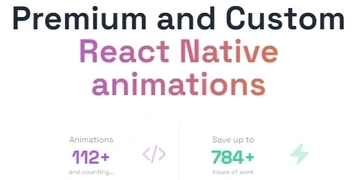
- Animations: Reanimated 3, Gesture Handler, Skia for custom rendering
- Native build flow: EAS Build, OTA updates with Expo Updates, app signing
- Bridging React Native ↔ Swift / Kotlin via TurboModules
Discord, Coinbase, Shopify, Microsoft Office mobile, Walmart, Bloomberg, and Tesla's in-app controls all ship React Native. For most teams it lets a small mobile crew (1-3 engineers) maintain feature parity between iOS and Android.

















![React Native - The Practical Guide [2024 Edition] thumbnail](https://cdnq.courseflix.net/course/thumbnail/react-native-the-practical-guide-2021-edition-160x90.webp "React Native - The Practical Guide [2024 Edition] thumbnail")