CF

React Native Mastery - the Ultimate React Native and Expo Course

15h 56m 3s
English
Paid

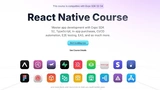
The "React Native Mastery" course offers comprehensive training in mobile development using React Native and Expo. Throughout the course, you will create 7 different projects, allowing you to build a portfolio with real mobile applications. The course covers a wide range of topics, including game development, animations, and the creation of full-fledged applications, providing valuable knowledge for both beginner and experienced developers.

About the Author: Vadim Savin (notJust.dev)

Vadim Savin (notJust.dev) thumbnail

Vadim Savin is a Moldova-based React Native educator behind the notJust.dev YouTube channel and paid bootcamp programs. He is one of the most consistently active independent React Native instructors, with a focus on full-stack mobile builds (React Native + Supabase / Firebase / AWS Amplify).

His CourseFlix listing carries two notJust.dev courses on React Native and Expo development. Material is paid and aimed at developers building production mobile apps with React Native rather than dabbling.

Watch Online 73 lessons

This is a demo lesson (10:00 remaining)

You can watch up to 10 minutes for free. Subscribe to unlock all 73 lessons in this course and access 10,000+ hours of premium content across all courses.

View Pricing
0:00
/
#1: 0. Welcome
All Course Lessons (73)
#Lesson TitleDurationAccess
1
0. Welcome Demo
01:35
2
1.0 Intro
01:33
3
1.1 Create a new project
06:40
4
1.2 Images
07:07
5
1.3 Icons
02:55
6
1.4 ScrollView
02:39
7
1.5 Buttons
04:01
8
1.6 Safe Area View
13:07
9
1.7 JSX
07:34
10
1.8 Conditional rendering
17:09
11
1.9 Custom compone
14:05
12
1.10 StyleSheet API
02:26
13
1.11 Debugging
12:51
14
2.0 Intro
03:04
15
2.1 Create a new project
02:36
16
2.2 Quiz UI
22:35
17
2.3 Props
32:36
18
2.4 Wrapper compone
10:55
19
2.5 Extending compone
16:12
20
2.6 State
18:08
21
2.7 Context API
30:36
22
2.8 useEffect
22:43
23
2.9 Hooks
16:22
24
2.10 Persist data
09:31
25
2.11 Component Lifecycle
09:59
26
2.12 Bonus
04:46
27
3.0 Intro
02:20
28
3.1 Create a new project
01:23
29
3.2 Expo Router
38:02
30
3.3 Camera
20:08
31
3.4 File System
23:19
32
3.5 Videos
19:13
33
3.6 Media Library
04:35
34
3.7 Expo Config Plugins
05:19
35
4.0 Intro
03:24
36
4.1 Setup the project
23:16
37
4.2 Form Inp
30:20
38
4.3 Form Screen
15:55
39
4.4 React Hook Form
18:56
40
4.5 Validations with Zod
07:43
41
4.6 Payment and Summary Forms
14:36
42
4.7 Multistep Form
21:53
43
4.8 Overview
03:44
44
4.9 Picker (Dropdown)
12:58
45
4.10 Checkboxes and Switches
07:22
46
4.11 Date & Time Picker
11:08
47
5.0 Intro
02:06
48
5.1 Project Setup
10:02
49
5.2 Global State with Zustand
21:03
50
5.3 Worko State
19:21
51
5.4 Exercises State
08:49
52
5.5 Immer
08:32
53
5.6 S State
25:04
54
5.7 Clean Workout
05:58
55
5.8 Local First Architecture
11:57
56
5.9 Setup Expo SQLite
09:18
57
5.10 Worko Database
30:06
58
5.11 Exercises Database
19:12
59
5.12 S Database
14:45
60
5.13 Outro
01:36
61
User Interface - L1
19:28
62
User Interface - L2
14:51
63
6.0 Intro
04:02
64
6.1 Setup the Project
11:54
65
6.2 Your first animation
16:46
66
6.3 The UI thread
15:45
67
6.4 Gestures
10:57
68
6.5 Ball Mechanics
28:57
69
6.6 User interactions
18:52
70
6.7 Blocks & Collisions
28:13
71
6.8 Game state
10:29
72
6.9 Bonus Block Lives
05:28
73
6.10 Outro
03:13
Unlock unlimited learning

Get instant access to all 72 lessons in this course, plus thousands of other premium courses. One subscription, unlimited knowledge.

Learn more about subscription

Related courses

Frequently asked questions

What prerequisites are needed before taking this course?
Before enrolling in the course, students should have a basic understanding of JavaScript and React. Familiarity with mobile development concepts is helpful but not required, as the course covers foundational topics like JSX, conditional rendering, and custom components. A general interest in mobile app development using React Native and Expo would also be beneficial.
What types of projects will I build during this course?
Throughout the course, you will create 7 different projects that showcase various aspects of mobile development. These projects range from simple user interfaces to complete applications, covering areas such as game development, animations, and complex form handling using tools like React Hook Form and Zod for validation. This hands-on approach allows for a robust portfolio of real mobile applications.
Who is the target audience for this course?
The course is designed for both beginner and experienced developers who are interested in mobile app development using React Native and Expo. It is ideal for those looking to gain practical experience in creating mobile applications and understanding advanced topics like global state management with Zustand and local-first architecture.
How does this course compare in depth and scope to other React Native courses?
This course offers a comprehensive exploration of React Native and Expo, with a total of 73 lessons. It covers a wide array of topics, from basic components and state management to advanced concepts like the Context API, hooks, and Expo Config Plugins. The inclusion of multiple projects provides practical experience, differentiating it from other courses that may focus more on theoretical aspects.
What specific tools or platforms does this course focus on?
The course focuses on using React Native and Expo for mobile development. It includes lessons on Expo Router, Expo SQLite setup, and Expo Config Plugins, providing a thorough understanding of how to leverage Expo's capabilities. Additional tools such as Zustand for global state management, React Hook Form for form handling, and Zod for validations are also covered.
What topics are not covered in this course?
While the course provides a broad overview of React Native and Expo, it does not cover topics like backend development, server-side programming, or advanced performance optimization techniques. The focus is primarily on front-end mobile application development, creating user interfaces, handling state, and integrating with device APIs.
What is the expected time commitment for this course?
The course contains 73 lessons of varying lengths, and students should allocate sufficient time to not only watch the videos but also engage in building the projects. Depending on prior experience, a student might spend around 8 to 12 weeks to complete the course, dedicating several hours per week to fully grasp the concepts and complete the practical exercises.