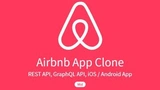
[Full Stack] Airbnb Clone Coding is a 198-lesson 29 hours 47 minutes self-paced course by Nomad Coders. Build a working clone of Airbnb from the ground up — frontend, backend, and deployment — in this full-stack project course from Nomad Coders.
Course facts
Lessons
198
Duration
29 hours 47 minutes
Language
English
Added to CourseFlix
November 2023
Instructor
Nomad Coders
Price
Premium
Build a working clone of Airbnb from the ground up — frontend, backend, and deployment — in this full-stack project course from Nomad Coders.
What You're Building
The app separates users into guests and hosts: guests can book stays, message hosts, and leave reviews, while hosts get an admin panel to manage their listings and reservations. A superuser panel sits on top for overall platform management.
Core Features
User registration, profiles, and social login
Two-way review and direct messaging system
Reservation booking with full CRUD management
Email notifications and Ajax-powered search
Tech Stack
The backend runs on Python and Django, deployed with Heroku and AWS; the frontend uses HTML, CSS, vanilla JavaScript, Tailwind CSS, and Gulp, with Google Maps, Twilio, and Mailgun handling maps, messaging, and email. By the end, you'll have a portfolio-ready clone of a real, widely-used service.
AirBnB (clone)
Users are divided into guest / host. Guests can place an order, leave a message to the host and leave a review. As a superuser, the host provides a panel for viewing and managing reservations.
Who teaches [Full Stack] Airbnb Clone Coding? Nomad Coders
Nomad Coders is a Korean-origin online coding school founded by Nicolas Serrano (Nico). The school is one of the largest in the Korean developer-education market and has expanded internationally, publishing courses in both Korean and English that emphasise project-based learning across modern web and mobile stacks.
The CourseFlix listing carries eight Nomad Coders courses covering React, React Native, Next.js, NestJS, Twitter / Instagram clones, and the surrounding ecosystem (auth, real-time updates, deployment). Material is paid and aimed at developers who learn best from building complete applications end-to-end rather than studying frameworks in isolation.
What lessons are included in [Full Stack] Airbnb Clone Coding?
This is a demo lesson (10:00 remaining)
Watch the first 10 minutes free. One payment unlocks all 198 lessons here and every other premium course. No auto-renew.
PyCharm is the premier Python IDE (integrated development environment). You will be hard pressed to find an editor that gives a more holistic way to build.
Welcome to the Python and Django Full Stack Web Developer Bootcamp! In this course we cover everything you need to know to build a website using Python, Django
Study the creation of voice AI agents using AWS and Python. Develop an assistant with real functionalities and a deep understanding of the architecture.
This course teaches beginners to industry professionals the fundamental concepts of Distributed Programming in the context of python & Django. We look at how t
Embark on a transformative journey in this intensive 60-day course, transitioning from a complete beginner with no programming experience to a skilled Python.
Apache Spark is a core data skill - here is how to show you got it! Learn Apache Spark from the ground up and show off your knowledge with the Databricks Associ
Testing automation doesn't have to be painful. Software testing is an essential skill for any developer, and I'm here to help you truly understand all types of
Best Way to Learn to Code. We believe that the best way to become a developer is by doing clone coding. It is very easy to get bored and unmotivated in the begi
Instagram clone with NodeJS, Prisma, GraphQL, React Native and TypeScript — build the full backend, frontend, and mobile app from scratch.
20h 48m
Frequently asked questions
What are the prerequisites for enrolling in this course?
The course requires an understanding of basic programming concepts and familiarity with Python. It is beneficial to have some prior experience with web development tools. The lessons begin with software setup, including Python and Django, so prior knowledge of these tools can be advantageous but is not mandatory.
What will I build by the end of this course?
By the end of the course, you will have developed a functional clone of Airbnb. This project includes features such as user management, room listings, reviews, messaging, and an admin panel. The final product will serve as a portfolio piece demonstrating your skills in full-stack development using Django.
Who is the target audience for this course?
The course is aimed at individuals interested in becoming full-stack developers. It is especially suitable for those looking to gain practical experience with Django and those aiming to enhance their skill set for modern startups and freelance projects.
How does the scope of this course compare to similar courses?
This course provides extensive coverage of full-stack development using Django, with a focus on practical application through building an Airbnb clone. Unlike some courses that only cover front-end or back-end, this course includes both, along with deployment and distribution aspects, which are often not covered in standard web development courses.
What specific tools or platforms are covered in this course?
The course covers tools and platforms such as Django for web development, VSCode as the primary IDE setup, and GitHub for version control. It also introduces Pipenv for environment management and Python as the programming language.
How much time should I expect to commit to this course?
The course consists of 198 lessons, and while it doesn't provide a total runtime, students should expect to commit a significant amount of time to complete it. This includes time spent on lectures, coding exercises, and building the project.
What topics are not covered in this course?
The course does not cover non-Python frameworks or front-end technologies like React or Angular, as it focuses on full-stack development using Django. Additionally, it does not delve into advanced database management or non-web-based applications.