"System Design for Beginners" is a course for beginners in a convenient self-paced format. The course offers a structured and clear introduction to system design and software architecture - from the very basics and without the need for prior preparation. We will cover key topics, starting with fundamental principles and moving towards the creation of full-fledged, scalable systems similar to those used in the real world.
System Design for Beginners
12h 2m 41s
English
Paid
System Design for Beginners is a 37-lesson 12 hours 2 minutes self-paced course by Arpit Bhayani. "System Design for Beginners" is a course for beginners in a convenient self-paced format.
Course facts
- Lessons
- 37
- Duration
- 12 hours 2 minutes
- Language
- English
- Instructor
- Arpit Bhayani
- Price
- Premium
What You Will Learn
Design Like a Professional
Gain the confidence to develop any systems, even those with the strictest requirements for reliability, scalability, and performance.
Understand What You Never Knew Before
Get acquainted with smart algorithms, architectural approaches, and engineering life hacks. We guarantee unexpected discoveries and insights.
Boost Your Skills - Boost Your Career
Deepen your knowledge to accelerate professional growth and stand out beneficially among colleagues.
Who teaches System Design for Beginners? Arpit Bhayani

Arpit Bhayani is a US-based software engineer (formerly at Amazon, Practo, and now an independent educator) who runs asliengineering.com and the Arpit Bhayani YouTube channel, both focused on system design and database internals. His material is unusually deep for the system-design-interview market — taking serious detours into the actual implementation of Redis, Postgres, and the data structures behind them.
His CourseFlix listing carries three Arpit Bhayani courses: The System Design Masterclass, Redis Internals (an end-to-end study of how Redis is implemented in C), and System Design for Beginners. Material is paid and aimed at engineers preparing for system-design interviews or doing infrastructure work on production data systems.
What lessons are included in System Design for Beginners?
0:00
/ #1: Course Introduction
All Course Lessons (37)
| # | Lesson Title | Duration | Access |
|---|---|---|---|
| 1 | Course Introduction Demo | 07:18 | |
| 2 | What is System Design? | 08:35 | |
| 3 | How to approach system design? | 16:19 | |
| 4 | How do you evaluate that you have built a good system? | 08:04 | |
| 5 | Relational Databases | 19:30 | |
| 6 | Database Isolation Levels | 18:23 | |
| 7 | Scaling Databases | 17:04 | |
| 8 | Sharding and Partitioning | 15:09 | |
| 9 | Non-Relational Databases | 14:28 | |
| 10 | Picking the right database | 12:20 | |
| 11 | What is caching? | 11:18 | |
| 12 | Populating and scaling a cache | 10:31 | |
| 13 | Caching at different levels | 19:00 | |
| 14 | Message Brokers and Queues | 15:30 | |
| 15 | Message Streams and Kafka Essentials | 22:24 | |
| 16 | Realtime Pubsub | 05:28 | |
| 17 | Load Balancers | 15:27 | |
| 18 | Circuit Breakers | 12:48 | |
| 19 | Data Redundancy and Recovery | 08:27 | |
| 20 | Leader Election for auto-recovery | 07:41 | |
| 21 | Client server model and communication protocols | 21:14 | |
| 22 | Blob storage and S3 | 15:28 | |
| 23 | Bloom Filters | 20:25 | |
| 24 | Consistent Hashing | 26:24 | |
| 25 | Introduction to Big Data Tools | 16:39 | |
| 26 | Designing E-commerce Product Listing | 19:38 | |
| 27 | Designing API Rate Limiter | 25:23 | |
| 28 | Designing and Scaling Notifications | 38:00 | |
| 29 | Designing Realtime Abuse Masker | 21:33 | |
| 30 | Designing Tinder Feed | 31:50 | |
| 31 | Designing Twitter Trends | 29:45 | |
| 32 | Designing URL Shortner | 47:12 | |
| 33 | Designing GitHub Gists and PasteBin | 27:30 | |
| 34 | Designing a Fraud Detection system | 24:11 | |
| 35 | Designing a Recommendation Engine | 36:09 | |
| 36 | Designing a Web Crawler | 53:30 | |
| 37 | Thank you and What's next | 02:06 |
Unlock unlimited learning
Get instant access to all 36 lessons in this course, plus thousands of other premium courses. One subscription, unlimited knowledge.
Learn more about subscriptionRecommended next
What courses are similar to System Design for Beginners?
 Updated 1mo ago
Laws of Software Engineering
By: Dr. Milan MilanovićThe book reveals key laws of software engineering, development principles, architecture, and team operations, helping to apply theory in practice. New
NewAgentic AI System Design
By: Keerti PurswaniA practical course on building agent-based AI systems, RAG architecture, context engineering, and LLMOps for developing reliable enterprise solutions.35h 30m Updated 6mo ago
Grokking the System Design Interview, Volume II
By: Design GurusAn advanced course for engineers preparing for serious systems design interviews. Learn to design reliable and scalable systems. Updated 2y ago
Object-Oriented Programming
By: ProgrammingExpert.ioProgramming languages are often classified based on their syntax, features, and execution models. This course introduces you to the idea of programming paradigm4h 36m5/5 Updated 2y ago
Master System Design and Design Pattern
By: UdemyThis course explains all the deep concepts of scalable system design problems and design patterns. These problems are frequently asked during interviews.11h 33m5/5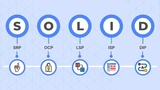 Updated 6mo ago
Grokking SOLID Design Principles
By: Design GurusReady to take your programming skills to the next level? Mastering the SOLID design principles will fundamentally change your approach to software development. Updated 1y ago
Networking Guide: Build Deep Relationships Quickly In Tech
By: Alex ChiouAre you struggling to land interviews or secure recommendations for that much-desired promotion? You're not alone.2h 19m5/5
More courses by Arpit Bhayani
 Updated 1mo ago
The Applied AI Masterclass
Practical course on creating AI systems and working with LLM. You will master prompting, agents, and RAG, and create prototypes and production solutions.20h 52m5/5 Updated 1y ago
Redis Internals
Redis Internals by Arpit Bhayani — self-paced course rebuilding Redis's key features in Go. Master database design, replication, and persistence.9h 6m5/5 FreeClassic
The System Design Masterclass
A masterclass that helps you become great at designing scalable, fault-tolerant, and highly available systems. This is a prime and intermediate-level cohort-bas43h 13m4/5
Frequently asked questions
What prerequisites are needed for this course?
The course is designed for beginners and does not require any prior preparation or background in system design. It starts with fundamental principles, making it accessible to those new to the subject.
What projects will I work on during the course?
Throughout the course, you will engage in practical exercises such as designing an API Rate Limiter, a Realtime Abuse Masker, and a Recommendation Engine. These projects help you apply theoretical concepts to real-world scenarios.
Who is the target audience for this course?
This course is targeted at beginners who want to gain a structured understanding of system design and software architecture. It is suitable for those interested in learning how to build scalable systems without prior experience in the field.
How does this course compare in depth to other system design courses?
This course offers a structured introduction to system design, covering fundamental concepts and practical applications. While it provides a comprehensive foundation, it is less advanced than courses focused on complex architectural strategies.
What specific tools or platforms are covered in this course?
The course covers a range of tools and concepts such as Relational Databases, Non-Relational Databases, Message Brokers and Queues, Kafka, Load Balancers, and Big Data Tools. These are essential for building and scaling systems.
What topics are not covered in this course?
The course does not delve into advanced topics such as microservices architecture, continuous integration/continuous deployment (CI/CD) practices, or advanced cloud computing strategies, keeping its focus on foundational system design principles.
How much time should I expect to commit to this course?
The course consists of 37 lessons designed for self-paced learning. The total runtime is not specified, but students should allocate time for both video lessons and practical exercises to fully grasp the concepts being taught.