Learn how to use the power of Docker to develop, test, and deploy Laravel applications in local and production environments with this premium video course.
Develop and Deploy Laravel Applications with Docker
2h 29m 56s
English
Paid
Develop and Deploy Laravel Applications with Docker is a 20-lesson 2 hours 29 minutes self-paced course by Andrew Schmelyun. Learn how to use the power of Docker to develop, test, and deploy Laravel applications in local and production environments with this premium video course.
Course facts
- Lessons
- 20
- Duration
- 2 hours 29 minutes
- Language
- English
- Instructor
- Andrew Schmelyun
- Price
- Premium
Docker and Laravel work together in a perfect marriage Docker, and more broadly containerization as a whole, is growing in popularity, not just for production environments but also for local development. Laravel is the leading modern PHP framework used by millions of developers around the globe. Together, they help develop and deploy web applications that are fast, scalable, and OS independent.
Working with a LAMP stack or other web server software installed on your local machine can be a nightmare when it comes time to upgrade. If you have multiple apps that require different versions of something like PHP it's even worse. Using Docker to build your local dev environment removes the headache of maintaining and installing dependencies for web server software across your machines.
“I have absolutely no clue how to get started deploying my Laravel app to a production server with Docker.”
That's okay, there's a lot of options! In this course, we'll explore a few different methods to deploy your Dockerized Laravel application onto a production server. Including how to setup and use an automated testing and CI/CD service like CircleCI.
Who teaches Develop and Deploy Laravel Applications with Docker? Andrew Schmelyun
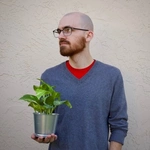
Andrew Schmelyun is a US developer and Laravel / DevOps educator who publishes long-form tutorial content on the Laravel-with-Docker stack and on the engineering side of running PHP services in production. His written tutorials and YouTube videos cover the operational concerns most Laravel material skips.
His CourseFlix listing carries three Andrew Schmelyun courses: Develop and Deploy Laravel Applications with Docker, Self-Made SaaS Course (a from-scratch Laravel SaaS build), and the unrelated indie game-dev 2048 with Bevy ECS. Material is paid and aimed at PHP developers ready to take operational responsibility for their own services.
What lessons are included in Develop and Deploy Laravel Applications with Docker?
0:00
/ #1: Introduction to Docker
All Course Lessons (20)
| # | Lesson Title | Duration | Access |
|---|---|---|---|
| 1 | Introduction to Docker Demo | 08:05 | |
| 2 | Introduction to Docker Compose | 08:25 | |
| 3 | Setting up Nginx | 08:57 | |
| 4 | Setting up Apache | 06:21 | |
| 5 | Setting up PHP | 07:42 | |
| 6 | Setting up MySQL | 06:58 | |
| 7 | Installing and using Composer | 09:05 | |
| 8 | Setting up our new Laravel app | 04:46 | |
| 9 | Setting up and using the Artisan service | 04:24 | |
| 10 | Setting up and using the npm service | 04:31 | |
| 11 | Building a simple test application | 12:04 | |
| 12 | Creating and running tests with PHPUnit | 03:59 | |
| 13 | Improving local Docker performance | 05:45 | |
| 14 | Enabling https locally with mkcert | 04:30 | |
| 15 | Caching with Redis | 08:32 | |
| 16 | Queuing and running jobs with Redis | 06:08 | |
| 17 | Running scheduled tasks | 04:58 | |
| 18 | Deploying a Laravel app with git | 18:55 | |
| 19 | Using Let's Encrypt with Docker in production | 05:20 | |
| 20 | Using-CircleCI-for-cicd-and-deployment | 10:31 |
Unlock unlimited learning
Get instant access to all 19 lessons in this course, plus thousands of other premium courses. One subscription, unlimited knowledge.
Learn more about subscriptionWhat courses are similar to Develop and Deploy Laravel Applications with Docker?
 Updated 1mo ago
Learn Laravel Vuejs from scratch - Build a TESLA web app
By: UdemyLearn Laravel and Vue.js from scratch by building a Tesla-style web app with Vuetify, Vuex, and an admin panel, across 48 lessons.6h 48m5/5 Updated 2y ago
Testing Laravel with PHPUnit
By: SpatieIn this course, Brent will help you get started testing a Laravel application. He'll cover how to get started, how to test every functionality in Laravel, and g2h 42m5/5 Updated 2y ago
Master Laravel & Create High-Level Applications with Laravel
By: UdemyLearn Laravel, while creating an eShop in the process. Bring to live all those ideas in your head after learning Laravel by doing. The course is compatible with14h 44m Updated 1y ago
Real-Time Data with Laravel Reverb and Vue.js
By: Vue SchoolWant to add real-time data functionality to your applications in Laravel and Vue.js?44m Updated 1mo ago
Vue 3, Nuxt.js and Laravel: A Practical Guide
By: UdemyBuild three real apps with Vue 3, Nuxt.js, and Laravel: an admin panel, an influencer app, and a checkout system with Stripe payments.10h 17m5/5 Updated 2y ago
Let's Build A Forum with Laravel and TDD
By: LaracastsA forum is a deceptively complex thing. Sure, it's made up of threads and replies, but what else might exist as part of a forum? What about profiles, or thread19h 30m Updated 2y ago
Start with TALL: Use Tailwind, Alpine, Laravel & Livewire
By: UdemyGet ahead of the competition and start with the TALL stack, made up of Tailwind CSS, Alpine.js, Livewire, and Laravel that will completely dominate the world of4h 17m Updated 3y ago
How to Structure Laravel Project
By: LaravelDailyBasic Laravel is an MVC framework, it s clear what should be in Model, View and Controller.4h 51m
More courses by Andrew Schmelyun
 Updated 2y ago
Self-Made SaaS Course
Learn how to build a full SaaS app from idea to launch. This course walks you through each step in clear, simple terms.5h 19m Updated 1mo ago
2048 with Bevy ECS
Build the classic 2048 game with Bevy's ECS in Rust, covering tile rendering, input handling, scoring, and core Rust ownership concepts.1h 40m
Frequently asked questions
What prerequisites should I have before enrolling in this course?
Before enrolling, you should have a basic understanding of Laravel and PHP, as these are core components of the course. Familiarity with command-line operations and version control using Git will also be beneficial, as the course involves deploying applications and using CircleCI for CI/CD processes.
What projects or applications will I build during this course?
During the course, you will build a simple test application using Laravel. You'll use Docker to set up the necessary environment and services such as Nginx, Apache, PHP, and MySQL, and you'll also learn to manage application dependencies with Composer and npm.
Who is the target audience for this course?
The course is aimed at developers who want to leverage Docker for developing, testing, and deploying Laravel applications. It is suitable for those who have basic knowledge of Laravel and wish to enhance their skills by integrating containerization and automated deployment techniques.
How does the depth of this course compare to similar courses?
This course covers the essentials of using Docker with Laravel applications, including setting up various services like Nginx, Apache, and MySQL. It also addresses more advanced topics like configuring HTTPS using mkcert, caching and queuing with Redis, and deploying with Let's Encrypt and CircleCI. It is designed to provide practical skills that can be applied in real-world environments.
What specific tools or platforms are covered in this course?
The course covers Docker and Docker Compose extensively for containerization. Additionally, it details setting up Nginx, Apache, PHP, and MySQL, as well as using Composer and npm for package management. For testing and deployment, it includes PHPUnit, mkcert, Redis, and CircleCI.
What topics are explicitly not covered in this course?
The course does not cover the basics of Laravel or PHP programming itself. It assumes that you already have a fundamental understanding of these technologies. It also does not delve into advanced Docker orchestration tools like Kubernetes.
How is the knowledge gained in this course applicable to other areas or careers?
The skills learned in this course can be applied to any development environment that uses Docker for containerization, not just Laravel. Understanding Docker, Composer, and npm is valuable in many software engineering roles, while knowledge of CI/CD practices with CircleCI is applicable to any modern DevOps pipeline.