Foundations of Western Civilization II: A History of the Modern Wester
24h 29m 59s
English
Paid
Added to CourseFlix
Foundations of Western Civilization II: A History of the Modern Wester is a 48-lesson 24 hours 29 minutes self-paced course by Dr. Robert Bucholz, Wondrium (The Great Courses). This is less a timeline of dates than an argument about what it means to belong to a civilization.
Course facts
Lessons
48
Duration
24 hours 29 minutes
Language
English
Added to CourseFlix
April 2024
Instructor
Dr. Robert Bucholz, Wondrium (The Great Courses)
Price
Premium
This is less a timeline of dates than an argument about what it means to belong to a civilization. Professor Robert Bucholz traces five centuries of Western development, from the Renaissance through to the present day.
What the course covers
The long arc of social change from the Renaissance to the modern era
How political systems evolved into the governments we recognize today
Industrialization and its ripple effects on economic life
How to read current events against their historical roots
Across 48 lectures, the aim isn't just to recount history but to make its legacies legible – so the forces that shaped modern society become easier to recognize in the world around you now.
Who teaches Foundations of Western Civilization II: A History of the Modern Wester?
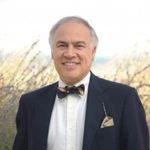
Dr. Robert Bucholz is a US history professor (Loyola University Chicago) specialising in early modern English and European history. His teaching material has been published as on-demand video courses for general adult audiences through The Great Courses / Wondrium.
His CourseFlix listing carries Foundations of Western Civilization II — A History of the Modern Western World — the second part of a comprehensive lecture series on Western civilisation, covering the modern era from the Renaissance through the twentieth century.
Material is paid and aimed at general adult learners interested in world history. The course sits in the broader History and Culture catalog on CourseFlix.
Wondrium (formerly The Great Courses Plus and originally The Great Courses) is a US online education platform that has been publishing university-level video lecture series since 1990. The platform's distinctive contribution is the depth and production quality of its courses — each is taught by a tenured university professor with the production values of a documentary series, not a YouTube tutorial.
The catalog covers academic disciplines rather than technical-skill training: history, philosophy, science, mathematics, literature, music theory, religion, economics. Material is taught by faculty from Stanford, Yale, Princeton, the University of Chicago, MIT, and similar institutions. Wondrium is typically used by intellectually-curious adult learners filling in the liberal-arts side of their education.
The CourseFlix listing under this source carries over 19 Wondrium / Great Courses titles spanning that range — sitting in the broader CourseFlix catalog as general-interest reference rather than as a software-engineering track. Material is paid; Wondrium itself runs on a monthly / annual subscription on the original platform.
What lessons are included in Foundations of Western Civilization II: A History of the Modern Wester?
This is a demo lesson (10:00 remaining)
Watch the first 10 minutes free. One payment unlocks all 48 lessons here and every other premium course. No auto-renew.
Gain insight into the history of one of the most complicated yet consequential regions in our world today. In The Middle East in the 20th Century, you will gain
By: Wondrium (The Great Courses), Dr. Craig G. Benjamin
Uncover the fascinating origins of East Asian civilization in this comprehensive course that explores the history of China, Japan, Korea, and Southeast Asia. So
By: Wondrium (The Great Courses), Constance Kassor
Examine the current geopolitical reality of an ancient people as you uncover the past, present, and possible future of Tibet. There are few regions that have be
By: Wondrium (The Great Courses), Dr. Thomas F. X. Noble
In this sweeping course, you get the classic grand tour of ancient Western civilization, taught by an award-winning professor of history at Notre Dame. You can
By: Wondrium (The Great Courses), Kristi Curry Rogers
Paleontologist Kristi Curry Rogers explores dinosaur diversity, fossil evidence, and the latest paleontology research across 24 lectures.
10h 11m
Frequently asked questions
Are there any prerequisites for taking this course?
There are no formal prerequisites for this course. However, a general interest in history and an understanding of basic historical timelines may be beneficial. The course covers a wide range of historical developments from the Renaissance through modern times, so prior exposure to Western history might enhance your learning experience.
What historical periods will be covered in this course?
The course spans five centuries, beginning with the Renaissance and extending to the early 21st century. Key periods include the Renaissance, the Protestant Reformation, the Enlightenment, the Industrial Revolution, both World Wars, and the Cold War era. Each period is explored in the context of its impact on Western civilization.
Who is the target audience for this course?
This course is ideal for anyone interested in understanding the evolution of Western civilization and its influence on the modern world. It's suitable for students of history, political science, and related fields, as well as lifelong learners who want to deepen their knowledge of Western historical contexts.
How does this course compare to other history courses?
Unlike some history courses that may focus on specific events or narrow timeframes, this course provides a broad narrative of Western civilization over five centuries. It emphasizes understanding the social, political, and economic forces that have shaped modern governance and societal structures.
What specific topics are not covered in this course?
The course does not cover non-Western civilizations in detail. While it provides context for global interactions, such as the New World encounters and imperial rivalries, the primary focus remains on Western developments and their global impacts. It does not delve deeply into contemporary history post-2001.
How much time should I expect to commit to this course?
The course consists of 48 lectures. The total runtime is not specified, but given the typical structure of such courses, you might expect each lecture to be around 30 minutes to an hour. Allocating time for additional readings and reflections will enhance your understanding of the material.
What skills or knowledge can I carry over to other courses or careers?
The course enhances your ability to contextualize historical events and understand their legacies, which is valuable in fields like history, political science, and international relations. The insights into industrialization, political systems, and social progress can also benefit careers in education, policy-making, and cultural studies.